2026 Paving Comparison: Cost, Durability & Maintenance
Whether you are planning a sleek, modern retreat or a warm, rustic garden path, the Porcelain vs. Sandstone debate is likely at the center of your research. Both materials are industry favorites for 2026, but they offer vastly different experiences in terms of cost, upkeep, and "vibe."
This guide breaks down the essential differences to help you decide which material deserves a spot in your outdoor space.
At a Glance: The Key Differences
| Feature | Porcelain Paving | Sandstone Paving |
|---|---|---|
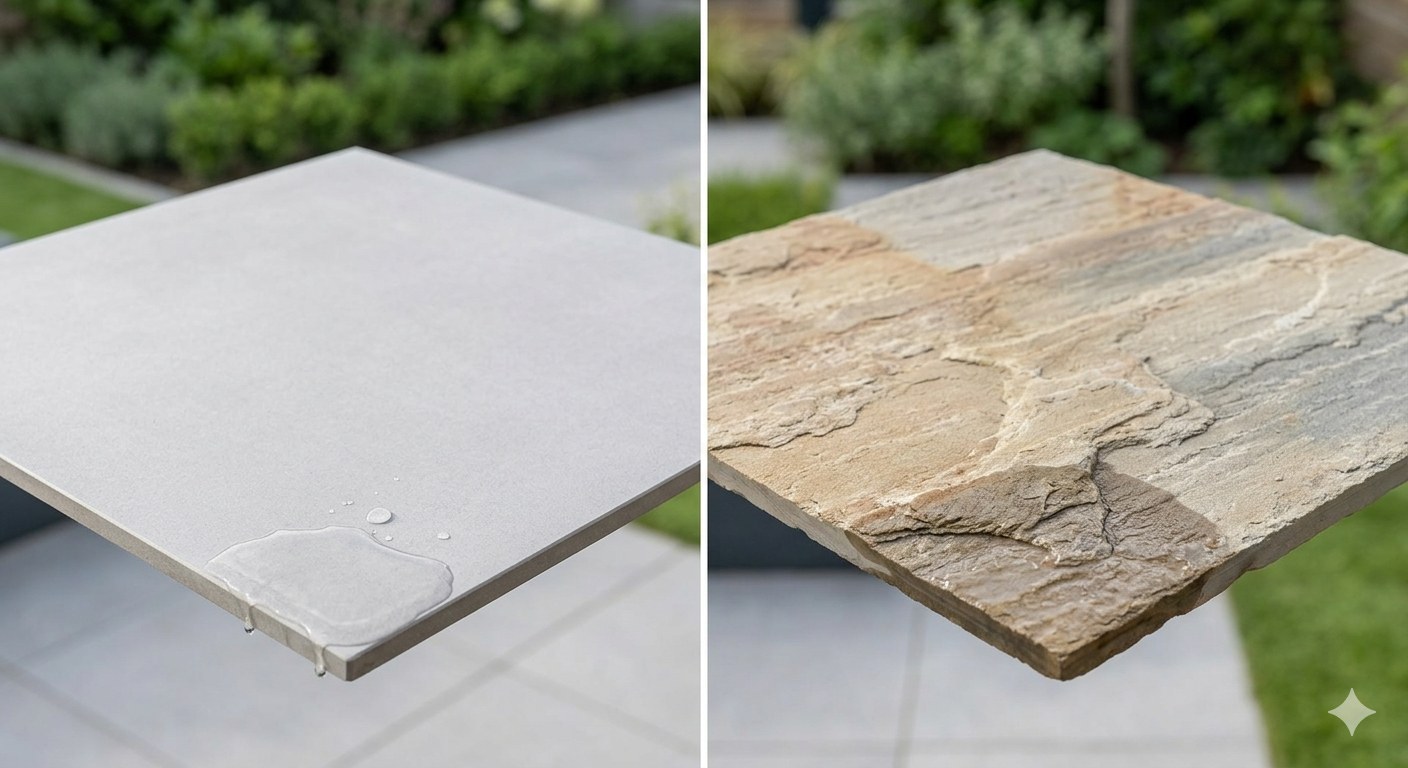
| Origin | Man-made (Kiln-fired clay) | Natural (Quarried stone) |
| Appearance | Uniform, modern, consistent | Unique, textured, varied |
| Maintenance | Ultra-low (Fit and forget) | Moderate (Requires sealing) |
| Durability | Extremely high; scratch-resistant | High; can weather over time |
| 2026 Price | Higher upfront (£40–£85/m²) | Budget-friendly (£20–£45/m²) |
The 2026 Technical Verdict
In 2026, we are seeing a significant shift toward Vitrified Porcelain in urban Somerset gardens due to its superior resistance to the increasingly wet UK winters. However, Calibrated Indian Sandstone remains the staple for rural barn conversions and heritage properties where architectural harmony is required.
Pro Tip: Regardless of material choice, the longevity of your patio depends on the Sub-Base Integrity. We recommend a minimum of 100mm compacted MOT Type 1 with a full 4:1 grit sand and cement sharp mortar bed.
1. Aesthetic: Clean Lines vs. Natural Character
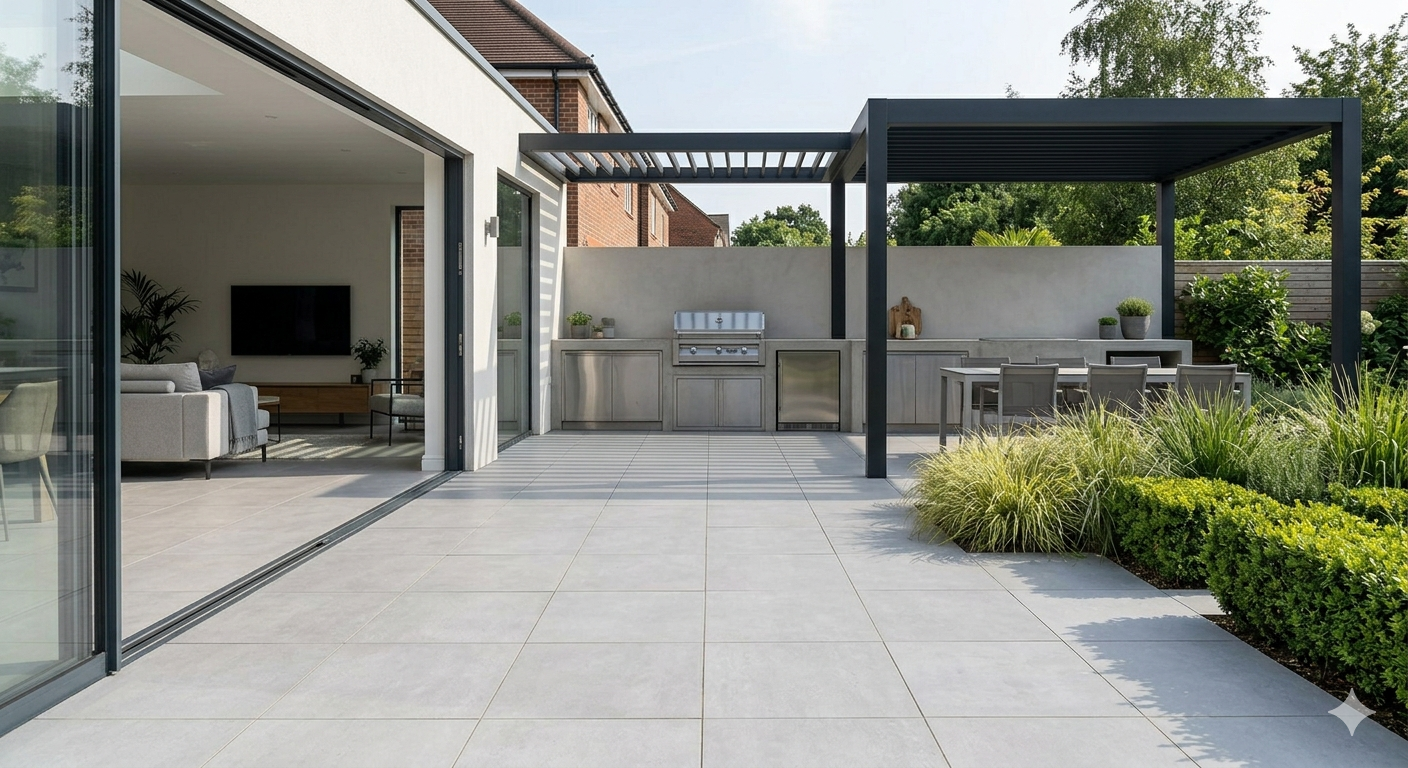
The first thing you’ll notice is how they look. Because porcelain is engineered, you get incredible consistency. If you order 50 square meters of "Anthracite Grey," every slab will match. It’s perfect for contemporary designs and "inside-outside" living where you want your kitchen floor to flow seamlessly onto the patio.
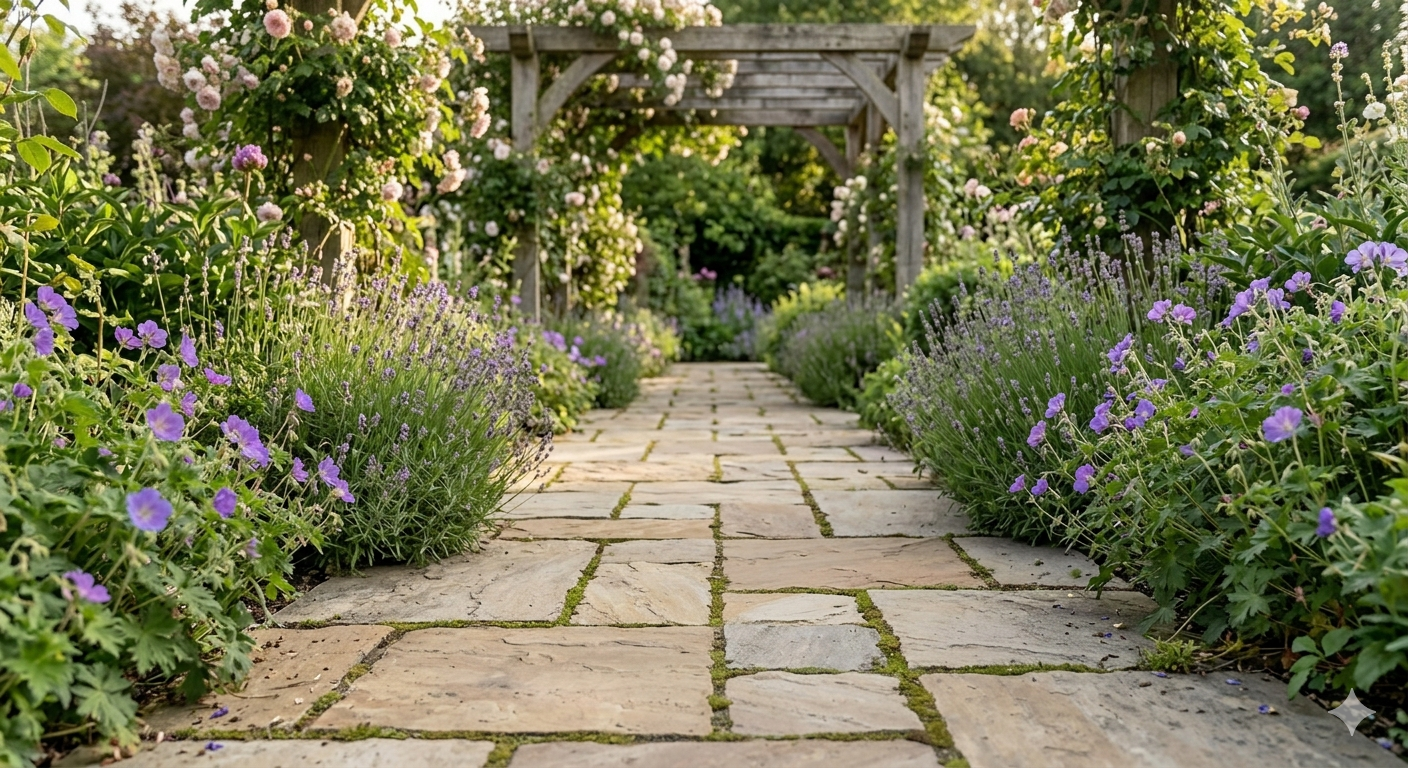
Sandstone, on the other hand, is a product of nature. No two slabs are identical. You’ll find beautiful fossils, iron streaks, and tonal shifts that give a garden a timeless, "always been there" feel. If you love a riven (textured) surface and a rustic look, sandstone is the winner.
2. Maintenance: The "Sunday Afternoon" Factor
This is usually the deal-breaker for most homeowners.
- Porcelain is non-porous: This means it has a water absorption rate of less than 0.5%. Spilled red wine? Fallen leaves? Moss and algae? They sit on the surface and can be wiped or hosed away easily. It doesn't require sealing—ever.
- Sandstone is a sponge: As a natural stone, it is porous (around 1.7% absorption). Without a high-quality sealant applied every 2–3 years, it can absorb moisture, leading to deep-set stains or green algae growth in shady spots.
3. Durability and Weather Resistance
In the UK's "freeze-thaw" climate, durability matters. Porcelain is vitrified (fired at extreme temperatures), making it incredibly dense. It is essentially frost-proof and won't fade in direct sunlight. Sandstone is very tough, but because it holds moisture, it can occasionally "spall" or flake if water gets inside and freezes during a harsh winter.
4. The Bottom Line: Cost in 2026
While prices vary by region, here is what you can expect for a standard patio project this year:
- Budget Choice: Indian Sandstone remains the most cost-effective entry point. It’s easier to cut and lay, which often means lower labor costs from contractors.
- Investment Choice: Porcelain carries a higher price tag for the materials and requires a specialist "slurry primer" to bond the slabs to the base. However, many find the higher initial cost pays for itself within 5 years by eliminating maintenance kits.
Which Should You Choose?
Choose Porcelain if... You want a "set and forget" patio, love modern design, and have a slightly higher upfront budget.
Choose Sandstone if... You prefer the warmth of natural stone, enjoy the way materials "age" over time, or are working with a stricter initial budget.
Decided on your material? View our Patio Installation Services to see how we can bring your vision to life in Somerset.
Request a 2026 Patio Estimate
Enter your garden dimensions below, and our Somerset team will provide a bespoke quote for your preferred material.
*Estimates include full excavation, MOT Type 1 sub-base, and professional installation by Perspective Landscapes.